Amazon Product Liability Insurance Cost: 3 Key Factors

In this guide
The quick answer
What determines the cost of Amazon product liability insurance?
The three main factors are how much you sell, what products you sell, and whether you operate as a private-label brand or a reseller. Higher sales mean more exposure to potential claims. Products that could injure someone usually cost more to insure. Private-label sellers may also face greater product responsibility than retailers selling established brands. Your actual premium depends on the insurer, policy terms, and business details.
For the current rules, start with Amazon's official commercial liability insurance requirements.
Why can one Amazon seller receive an affordable insurance quote while another seller is quoted much more? It is tempting to compare monthly premiums alone, but insurers are pricing different kinds of risk. A store selling simple household items is not necessarily comparable with a brand selling trampolines, skincare products, or children's toys.
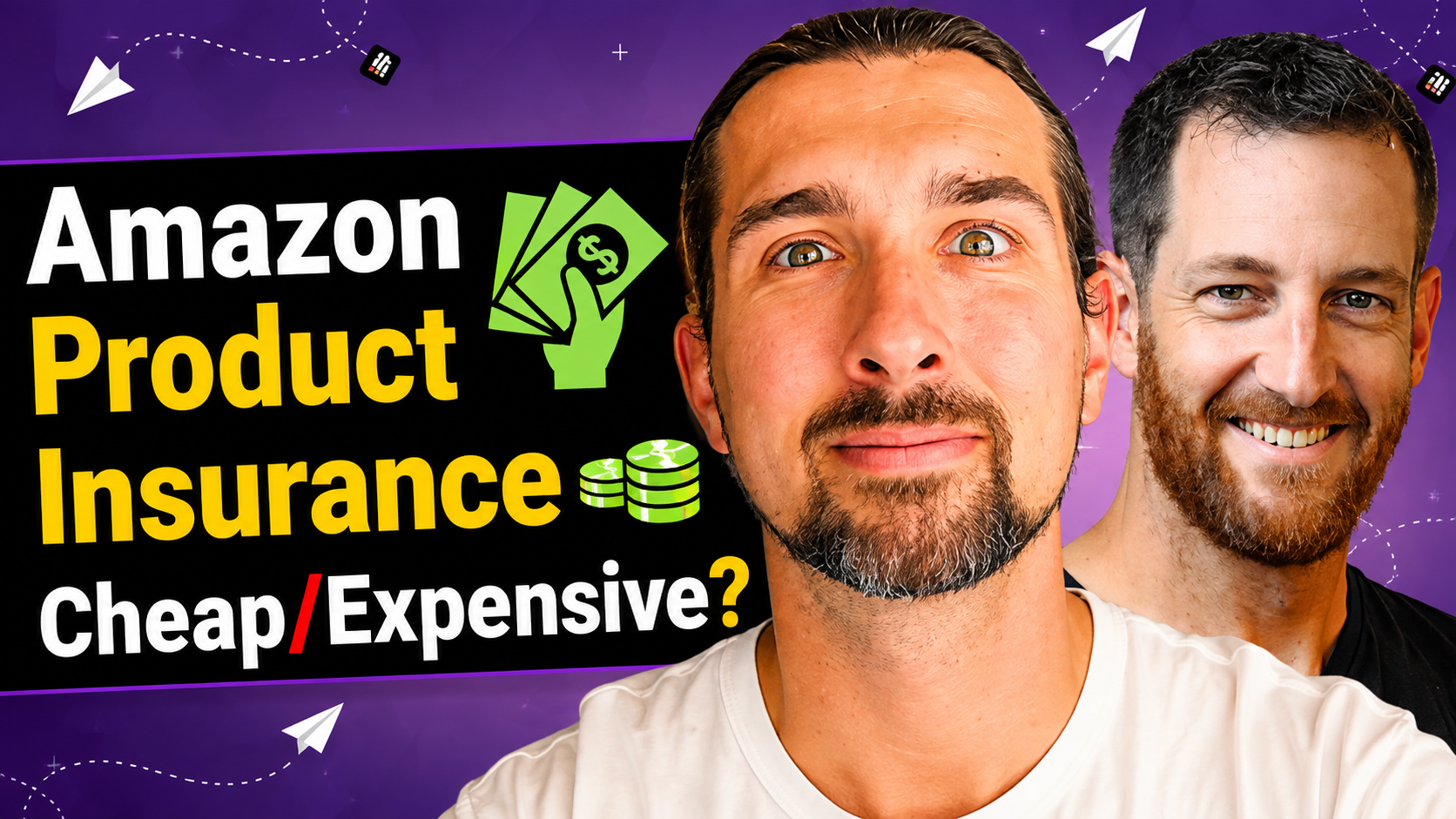
In my conversation with Amit Batzir, co-founder of Spott, we broke the subject down into three practical questions. Those questions are still a useful starting point when preparing to insure an Amazon FBA or FBM business. For the basics of the protection itself, see my product liability insurance explainer. I'll cover the pricing factors, updated requirements, and how to request a quote.
Disclosure and service update
Spott is no longer in business, so this article does not direct you to sign up with Spott. I now personally recommend contacting Lawrence Lipman for an insurance quote. I've purchased insurance through Lawrence myself. This recommendation may involve a referral benefit; always review the insurer, coverage, exclusions, and final price yourself.
My current insurance contact
Ask Lawrence Lipman for a quote
I recently purchased insurance from Lawrence and recommend speaking with him about insuring your Amazon store. Mention my name, Vova Even, when you reach out. Ask for the best available price for coverage that meets your actual needs.
Email Lawrence: lipmaninsurance@gmail.com
A referral is not a guarantee of a particular premium, insurer acceptance, or policy approval by Amazon.
The three factors that have the biggest impact on your premium
Think of insurance pricing as an assessment of how frequently a claim could happen and how expensive that claim might become. No single number tells the whole story. A seller with modest sales can carry meaningful risk if a product could cause serious injury, while a higher-volume seller of relatively low-risk products may be easier to insure than expected.
| Pricing factor | Often lower exposure | Often higher exposure |
|---|---|---|
| Annual sales | Fewer units reaching customers | More units sold and greater claim exposure |
| Product category | Ordinary products with limited injury potential | Products involving falls, children, skin, ingestion, or electrical risks |
| Business model | Retailing established brands with clear supply records | Selling products under your own private label |
These are pricing tendencies, not automatic discounts or fixed underwriting rules. A provider also looks at your claims history, operating location, manufacturing arrangements, and the coverage requested.
1. How does your Amazon sales revenue affect insurance costs?
The more products you sell, the more products end up in customers' hands. That creates additional opportunities for something to go wrong. In the interview, Amit identifies sales volume as the first major factor because insurers consider the size of that exposure when calculating a premium.
Imagine two sellers offering the same simple kitchen accessory with similar quality controls. One ships a few hundred units a year; the other ships tens of thousands. Even when the product risk is similar, the second business has more customer interactions and potentially more claims. The insurer may price accordingly.
That is why an insurance application usually asks about annual gross revenue or estimated sales. Be ready to provide a realistic current figure and projection. A newly launched business may need to estimate its first year's sales, while an established seller can use historical reports.
Revenue is not the same as profit. A seller with $300,000 in sales and a slim margin still puts approximately $300,000 worth of product into commerce. Insurers are not simply charging a percentage of your take-home earnings; they are assessing liability exposure.
An increase in sales does not always produce a proportional increase in premium, and lower revenue does not automatically mean you are exempt from Amazon's insurance rules. That distinction has become particularly important under the November 2026 policy update.
2. Why do certain Amazon product categories cost more to insure?
The second question is what you actually sell. Some products can cause more severe injuries or losses if they malfunction, are used incorrectly, or have a safety defect. An insurer may see those products as more challenging to cover even when the store is relatively small.
Amit uses trampolines as a memorable example in our discussion. His point is about falls and physical injury: if someone is hurt while using a product, the resulting claim may be costly. That example should not be interpreted as an official Amazon ranking of its single most dangerous category.
Often simpler risks
For example, basic stationery or ordinary decorative accessories may present fewer obvious injury hazards. The actual materials and intended use still matter.
Risks needing closer review
Sporting equipment, children's toys, creams applied to skin, ingestible products, and electrical items may create more complex injury or safety exposures.
Children's products are a particularly clear example. A small part that creates a choking risk is not equivalent to an ordinary adult stationery item. Similarly, a cream raises questions about ingredients, labeling, allergic reactions, and how the product is applied.
Insurers can also look within a broad category. Not every toy, sports accessory, or skincare item carries identical risk. Materials, design, warnings, intended users, testing, and quality-control documents can all influence how the product is evaluated.
The practical takeaway is to describe your products precisely rather than writing only “home goods” or “beauty products” on an application. Accurate details help a broker identify suitable coverage and avoid a policy that excludes what you actually sell.
3. Is private-label product insurance more expensive than reseller insurance?
It can be. The third factor Amit highlights is whether you sell under your own brand or resell products from another company. In insurance underwriting, a private-label seller may be treated as having manufacturer-like responsibility because the product carries the seller's brand.
For example, suppose you source an unbranded kitchen tool from a factory and sell it on Amazon under your own trademark. Customers see your brand, and you may be responsible for product specifications, instructions, packaging, and quality decisions. An insurer will want to understand that relationship.
Now compare a retailer purchasing authentic, finished products from an established brand through documented distribution channels. The retailer still has potential liability, but the insurer may assess the allocation of product responsibility differently. Depending on the product and arrangements, that can produce a lower premium.
This does not mean a reseller is automatically protected by the brand owner's insurance, nor that every private-label seller legally becomes the manufacturer in every jurisdiction. Coverage, indemnification, and legal responsibility depend on the facts and policy language.
When requesting quotes, explain who makes the product, who imports it, whose name appears on the label, and whether you have supplier agreements and testing records. A transparent application is better than a cheaper policy based on an inaccurate description.
When does Amazon require product liability insurance in 2026?
For the Amazon.com US store, Amazon generally requires sellers to obtain and maintain qualifying commercial liability insurance within 30 days after exceeding $10,000 in gross proceeds in any single month. The minimum is $1 million per occurrence and $1 million in aggregate. Amazon may also require insurance in other circumstances.
Important update: effective November 2, 2026
Amazon additionally requires qualifying liability insurance for products in categories with enhanced safety listing requirements regardless of the $10,000 monthly sales threshold. Examples Amazon identifies include certain children's, cosmetic, ingestible, and lithium-battery products. Check Amazon's enhanced-safety category list and your Account Health notices for the products that apply.
The policy must generally cover the products listed in your store, include product-related bodily injury exposure, and name Amazon.com Services LLC and its affiliates and assignees as additional insureds. Amazon also specifies other criteria, including the insurance basis, deductible, insurer qualifications, and matching business details.
Another change affects sellers based in Mainland China: for new and qualifying renewed coverage after November 2, 2026, Amazon requires the Amazon Insurance Accelerator route, subject to the transitional rules for previously accepted policies. If that describes your business, confirm the approved purchasing pathway before using an independent recommendation.
These rules concern the US marketplace; requirements in other Amazon stores and local laws can differ. Always use the latest Seller Central insurance policy rather than relying on an old sales-threshold summary.
How to get an accurate Amazon insurance quote
Before contacting an agent, prepare the information a provider needs to assess your business. This short checklist makes comparisons easier and reduces the chance of a quote changing after underwriting.
- Sales: your latest annual revenue and a realistic projection for the upcoming policy period.
- Products: categories, main ASINs, product descriptions, materials, intended users, and any safety documents.
- Supply chain: whether you private label, manufacture, import, wholesale, or resell branded goods.
- Business details: legal entity name, operating location, marketplace, and any past claims.
- Coverage needs: policy limits, deductible, product exclusions, territory, and Amazon additional-insured wording.
Compare more than the annual premium. A lower price is not a saving if the policy excludes your most important ASIN or cannot satisfy Amazon's certificate requirements. Check whether the insurer is prepared to issue an acceptable Certificate of Insurance (COI) and whether product liability is actually included.
You may also find useful background in Insureon's Amazon seller insurance cost guide, which discusses product categories, annual sales, policy terms, and other underwriting considerations. Published averages are not personalized quotes. If your company is outside the US, my non-US seller insurance guide also explains cross-border considerations, though you should follow today's official requirements.
Ready to compare coverage?
Get a quote for your Amazon store
My recommendation is to contact Lawrence Lipman, who recently helped me purchase insurance. Tell him what you sell, your approximate revenue, and whether you operate a private-label brand. Please mention Vova Even when you write.
Email: lipmaninsurance@gmail.com. Confirm the final premium and coverage directly; a competitive price cannot be promised in advance.
Frequently asked questions about Amazon product insurance costs
Does lower Amazon revenue mean lower insurance premiums?
Often, but not always. Lower sales can mean fewer units in use and less exposure, yet dangerous product types, prior claims, or minimum policy premiums may outweigh that advantage. Some sellers must carry insurance even at low revenue because their products fall into enhanced-safety categories.
Do Amazon FBA and FBM sellers both need liability insurance?
Yes, the applicable Amazon.com insurance requirement is linked to your sales and product circumstances, not simply whether Amazon fulfills an order. FBA fulfillment does not replace insurance against product-related injury or damage claims. Verify the policy for your particular store and products.
Is private-label insurance always more expensive?
No. Private-label activity can increase underwriting complexity, but the quote also depends on the product, revenue, supplier controls, previous claims, and coverage. A well-documented low-risk private-label product could cost less to insure than a high-risk product being resold by another business.
Does Amazon provide insurance automatically?
Do not assume Amazon automatically insures your store. Amazon offers resources and an Insurance Accelerator to help eligible sellers find coverage, but you must obtain the appropriate policy, maintain it, and supply evidence when required.
What if I sell products in several categories?
Disclose every product category and ask the insurer to confirm the policy covers all products you list. One higher-risk line can affect the terms for the entire business. Adding a new product later may also require notifying your insurer or adjusting the policy.
More Amazon insurance and entrepreneur interviews
If this short conversation helped clarify the pricing side of insurance, I have two YouTube playlists you can explore next. The first stays focused on Amazon product insurance; the second covers wider business conversations with entrepreneurs.
Amazon Product Insurance
More discussions about protection, requirements, and insurance questions for Amazon sellers.
Amazon FBA Freedom Podcast
Interviews with entrepreneurs on ecommerce decisions, lessons, and building a business.
The bottom line: If you want to understand your Amazon product insurance cost, start with the same three questions from my interview: how much do you sell, what do you sell, and are you a private-label seller or a retailer? Then confirm Amazon's current requirements and request a quote for coverage that actually includes your products. The cheapest premium is useful only when the policy protects the business you run.
Educational information only, not legal or insurance advice. Requirements, availability, and pricing can change. Confirm details with Amazon and a qualified insurance professional.