UGC for Software Companies: How to Get More Sales With YouTube SEO, Ads & Affiliates

In this guide
How can a software company use UGC to get more signups and sales?
And if you are a creator, how can you make money by creating content around software?
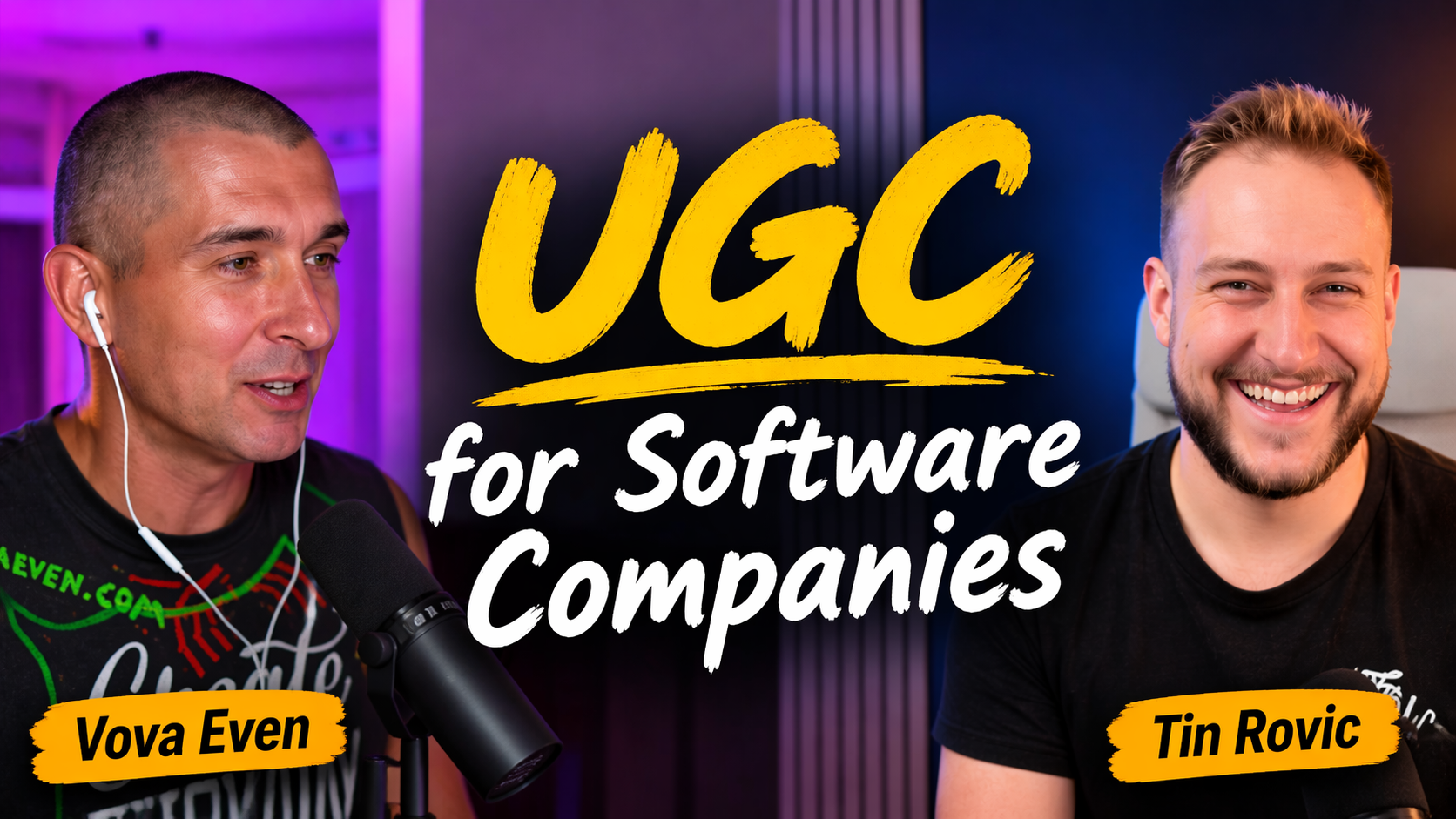
I recently sat down with my friend Tin Rovic to talk about exactly that.
Tin works with software and AI companies on UGC, YouTube SEO, and creator marketing.
He has also generated more than $100,000 in affiliate commissions from GoHighLevel.
That is his commission income, not the total revenue he generated for the company.
I have been doing affiliate marketing in the Amazon software space for years as well, so this was a fun conversation for me.
We went deep.
We talked about UGC ads, YouTube SEO, affiliate programs, hooks, landing pages, creator briefs, paid ads, recurring commissions, and even what happens when an affiliate program suddenly changes the rules on you.
You’ll find the YouTube podcast here, if you’d rather listen to our talk.
So, let’s go. :)
What Is UGC for Software Companies?
UGC means user-generated content.
For software companies, it usually means content that feels like it came from a real user or creator instead of from a big marketing department.
It can be simple.
A person talking to the camera.
A screen recording.
A testimonial.
A podcast clip.
A tutorial.
A problem-and-solution video.
Sometimes the best UGC does not even look like an ad.
That is part of the point.
People usually connect more easily with another person than with a polished company message.
Tin works with software companies that hire him to create this type of content.
Some companies work with him every month.
Others pay for a specific video or campaign.
The goal is normally simple:
Get more attention.
Get more signups.
And eventually get more revenue.
The Two Big Opportunities: YouTube SEO and UGC Ads
One of the first things I asked Tin was:
What is actually working now?
Tin pointed to two areas.
The first is YouTube SEO.
The second is UGC for paid ads.
They work in different ways.
YouTube SEO can keep bringing traffic for months or even years.
Paid UGC can put your software in front of people quickly if the creative works.
A smart software company can use both.
Why YouTube SEO Can Be So Powerful for Software
Think about how you look for software.
Maybe you are a real estate agent and need a CRM.
What might you search?
Something like:
Best CRM for real estate agents.
That search tells us a lot.
You are probably a real estate agent.
You probably need a CRM.
And you are already comparing options.
That means you may be much closer to buying than someone who simply searched:
What is a CRM?
This is why search-based YouTube videos can work so well.
You are meeting the person while they are already looking for a solution.
YouTube and Google Can Work Together
There is another nice thing about YouTube SEO.
YouTube videos can appear inside Google search results.
So one piece of content may have a chance to bring traffic from both YouTube and Google.
A creator might publish a video called:
Best CRM for Real Estate Agents
Someone searches that phrase.
They find the video.
They watch the creator compare different tools.
The creator recommends a software product.
The viewer clicks the link.
Maybe they start a trial.
Maybe they become a paying customer later.
That one video can continue working long after it was uploaded.
Tin has SEO videos he created for software companies years ago that can still bring results.
That is what makes evergreen search content interesting.
You create the asset once.
People can keep discovering it.
Evergreen Keywords Can Compound Over Time
Not every keyword is evergreen.
News gets old.
Trends disappear.
Software changes.
But many searches can stay useful for a long time.
For example:
“Best CRM for real estate agents” can stay relevant as long as real estate agents need CRM software.
The same idea can work with almost any software category.
You can build content around what people already search for.
Tin compared this to compounding.
You keep adding useful search-based content.
One video starts working.
Then another.
Then another.
Over time, you may have many pieces of content bringing people into the business.
Tin also mentioned a software-company example he had heard about that reportedly generated around $800,000 in its first year through YouTube SEO and creator content.
He was not completely sure of the company name during our conversation, so I would treat this as an example he shared rather than a verified benchmark.
The bigger lesson is more important:
Search content can become a long-term acquisition channel.
Go After Buyers, Not Just Views
This is where keyword intent matters.
You do not only want traffic.
You want the right traffic.
Someone searching:
Best CRM
may be valuable.
Someone searching:
Best CRM for real estate agents
is even more specific.
Someone searching:
Best CRM for real estate agents in the USA
tells us even more about who they are.
These are often called bottom-of-the-funnel keywords.
The person already understands the problem.
They are closer to choosing a product.
That can make the traffic much more valuable.
Good Software SEO Keywords to Test
For software companies, Tin and I discussed several simple keyword formats.
You can test terms around:
- Best software for a specific type of customer
- Top software in a category
- Product reviews
- Product A vs. Product B
- Alternatives to a popular product
- Software for a specific use case
- “Is X the best software for Y?”
- Tutorials that solve a problem your software solves
For example, instead of making a broad video about CRM software, you might create:
GoHighLevel Review: Is It the Best CRM for Real Estate Agents?
Now you have the software name, the review intent, the product category, and the customer type all working together.
By the way, I also invite you to learn more about GoHighLevel here!
How to Find These Keywords
You do not need to make keyword research complicated.
In the interview, we mentioned tools such as Google itself, Google Keyword Planner, Ahrefs, Semrush, and Ubersuggest.
You can also simply start typing a problem into Google or YouTube and see what appears.
The key is understanding what your ideal customer is searching for.
A keyword tool is useful.
But the tool cannot replace understanding the person.
Ask:
Who is searching this?
What problem do they have?
How close are they to buying?
What would make them click my video instead of the other five videos?
Those questions matter a lot.
Your Video Still Needs to Win the Click
Finding the keyword is only the start.
Imagine five videos are already ranking for:
GoHighLevel Review
If your video says exactly the same thing, why should somebody choose yours?
You need an angle.
Maybe yours is:
GoHighLevel Review + Free Setup Guide
Or:
I Used GoHighLevel for 365 Days - Here’s What Happened
Or:
GoHighLevel Review: The Good, Bad & What I’d Do Differently
The topic may be similar.
But the packaging is different.
This includes the title.
The thumbnail.
The opening.
And the actual content.
The First Few Seconds Matter
Once somebody clicks, you need to give them a reason to stay.
You can speak directly to the person.
For example:
“You’re probably a real estate agent looking for a CRM that does not require five different tools.”
The right viewer immediately thinks:
Yep. That’s me.
Now you have their attention.
From there, you can show why the software may solve the problem.
UGC Hooks Can Make or Break the Ad
Search videos and paid UGC are different.
With search, the viewer already chose to click.
With an ad, you are interrupting them.
So the hook becomes even more important.
Tin likes testing bold hooks.
Sometimes even negative hooks.
Why?
Because people are naturally curious when they hear that something may be wrong.
A hook might be:
“X software is dead.”
Or:
“Why are you still spending 10 hours a week answering emails?”
Or:
“You’re about to watch a video about X software, but there’s one problem…”
The goal is not to lie.
The goal is to create enough curiosity for the right person to keep watching.
One UGC Hook Reached Around 20% CTR
Tin shared one campaign he worked on for an app related to helping people stop gambling.
The creative opened with a bold negative angle around gambling apps.
That hook reached around a 20% click-through rate in his campaign.
That does not mean every negative hook gets 20%.
Far from it.
It simply showed him that bold, emotionally clear hooks were worth testing.
And testing is the important word.
You cannot know every winning hook before you run it.
What Kind of UGC Works for Software?
UGC does not need to be a person standing in a fancy studio.
Tin mentioned many formats.
A podcast-style video can work.
A testimonial can work.
A screen recording can work.
Talking-head content can work.
Motion graphics can work.
A simple phone video can work.
What matters is that the content feels believable and clearly shows the problem and solution.
Highly edited content can still work too.
It just should not feel fake or disconnected from the person watching it.
A Simple UGC Ad Structure
One of the easiest structures for software is:
Hook → Problem → Solution → Call to action
Imagine you sell an AI email tool.
The hook might be:
“Are you still spending hours every day answering the same emails?”
Now the viewer knows exactly what problem you are talking about.
Then you introduce the tool.
Show what it does.
Show the screen.
Explain the benefit.
Then give a clear CTA.
Something as simple as:
“Click the link and try it for free.”
You do not need to make it complicated.
Put the CTA Before the End
This is one mistake I see creators make.
They create a great review.
They explain everything.
Then they wait until the final 20 seconds to mention the link.
But not everyone reaches the end.
If 100 people start your video, maybe far fewer will still be watching several minutes later.
So I like mentioning the CTA earlier.
Not necessarily in the first five seconds.
But somewhere early enough that a good part of the audience still sees it.
You can say:
“By the way, I’ll leave a link to the tool below if you want to try it.”
Then continue the video.
You can remind people again later.
Be Clear About Affiliate Links
I also prefer telling people when a link is an affiliate link.
I am not trying to hide it.
I might say:
“I’m an affiliate partner. If you use my link, I may get a commission. You may also get a special deal or discount.”
Simple.
People understand how it works.
And I believe being open builds more trust than pretending you have no financial relationship with the company.
Cookie Duration Matters for Affiliates
Software buyers do not always buy immediately.
Someone may watch your video today.
Start researching.
Try the software next week.
Talk to the team.
Then buy a month later.
That is why affiliate cookie duration can matter.
Some programs may track the referral for a short period.
Others may track it much longer.
For creators, longer tracking can be valuable because software buying cycles can take time.
If you already produce sales for a software company, you may also be able to negotiate.
That could mean:
A better commission.
A longer tracking period.
A payment per video.
Or another custom agreement.
Recurring Commissions Can Motivate Creators
Tin has done very well with GoHighLevel.
One reason is its recurring affiliate model.
He talked about receiving around a 40% recurring commission through the program he was using.
That gave him a reason to keep making content.
Old videos could still bring new users.
Existing users could continue creating recurring affiliate income.
From the software-company side, this can also be powerful.
If creators make more money when your customers stay, creators have a reason to bring you better customers and keep promoting your product.
Software Companies: Take Care of Your Affiliates
This part of the conversation was personal for me.
Years ago, I had one software affiliate relationship generating close to $8,000 a month in recurring commissions.
I had worked with the company for around seven or eight years.
Then the structure changed.
The recurring commissions disappeared.
Just like that.
It was not fun.
I had a team.
I had expenses.
And a meaningful income stream basically went from thousands per month to almost zero.
Luckily, I had other partnerships.
That helped.
My Lesson: Do Not Depend on One Affiliate Program
If you are a creator building an affiliate business, this is important.
One program can look amazing today.
But companies change.
They can get acquired.
Management can change.
Affiliate terms can change.
The company itself can disappear.
I am not saying promote 100 random tools just because you are afraid.
Promote things you actually believe are useful.
But think about risk.
If one company produces 100% of your affiliate income, you are depending heavily on a decision you do not control.
That experience taught me a lot.
Stay in Touch With Your Creators
If you own a software company, do not recruit affiliates and then disappear.
Talk to them.
Send updates.
Tell them about new features.
Send Black Friday offers.
Share new assets.
Let them know when commissions increase.
Give them reasons to create.
I once received an email from a software company while I was walking to the gym.
They told affiliates that commissions were being doubled for a period.
While walking, I pulled out my phone and recorded around eight quick videos about the software.
One email created more content.
That is how simple it can be.
Give Creators Something to Work Toward
Bonuses can also help.
For example, a company could create levels.
A creator reaches a certain amount in commissions and gets a bonus.
They reach the next level and the bonus gets bigger.
Now there is something to aim for.
And once somebody reaches a level, they may also want to maintain it.
The exact numbers depend on the business.
The idea is to reward creators who keep bringing results.
Build a Real Creator System
Tin also likes how companies such as GoHighLevel organize their affiliate relationships.
Creators can get updates.
Promotional assets.
Campaign information.
An affiliate manager.
Special offers.
Communication channels.
Everything is easier to find.
That matters.
Creators are more likely to make content when you make their job easy.
If they have to spend three hours trying to understand what changed in your software, many will simply create content for somebody else.
Give UGC Creators a Good Brief
This is especially important with paid UGC.
A creator needs freedom.
But they also need rules.
Maybe there are claims they cannot make.
Maybe Meta will reject certain wording.
Maybe the software serves a regulated industry.
If the creator records the whole video, sends it to you, and then the ad gets rejected because of one sentence, everyone loses time.
So build a clear brief before recording.
Explain what the product does.
Explain the audience.
Share what creators should show.
List claims they should avoid.
Share winning hooks.
Give examples.
Make the creator’s job easier.
Study Your Winning Hooks
Software owners should also keep track of what works.
Do not treat every creator like a completely separate experiment.
If one hook works very well, save it.
If another fails badly, save that information too.
Build a simple database or spreadsheet of:
Winning hooks.
Weak hooks.
Angles.
Click-through rates.
Conversions.
Creators.
Formats.
Then use that data in the next round of content.
Tin also suggested feeding winning examples into AI tools to help create new script ideas.
The important part is that AI is working from your real data instead of making random guesses.
Great UGC Cannot Fix a Bad Landing Page
This may be one of the most important parts of the whole interview.
You can create an amazing ad.
You can get the click.
You can send hundreds of people to the website.
And still get almost nothing.
Why?
Because the landing page is bad.
Tin shared one case where an ad generated around 400 to 500 clicks, but the company got no conversions.
The problem was not only the creative.
The path from the free trial to the paid plan was weak.
The free and paid options felt too similar.
And the landing page did not do a good job explaining the product.
This is a big lesson.
Do not blame the ad for everything.
Look at the whole funnel.
Put a Product Video on the Landing Page
Tin gave one very simple landing-page tip:
Show the software.
Put a video on the page.
Let visitors see what happens after they sign up.
What does the dashboard look like?
What problem does it solve?
Where do you click?
What can you create?
Software can be hard to understand from text alone.
A short demo can remove a lot of confusion.
Demo Accounts Can Help Too
Some software companies go one step further.
They let people open a demo account.
The visitor can explore something that looks like a real account, but the data is just sample data.
This can work well because the buyer gets to experience the software without going through the full setup process.
There are different ways to do it.
Maybe the demo is open.
Maybe users enter an email first.
Maybe you combine a demo with a free trial.
You need to test what works for your product.
Test the Full Funnel, Not Just the Ad
This is a good mindset for software founders.
UGC is one part of the system.
The landing page is another.
The trial is another.
The onboarding is another.
The paid plan is another.
If one part is broken, the whole campaign can struggle.
A creator may bring you good traffic.
But the creator cannot fix everything that happens after the click.
YouTube Ads Can Target Competitor Content
I also shared something from my own experience with YouTube ads.
You can get very specific with targeting.
For example, you may be able to put an ad around videos or channels related to another software product.
Imagine somebody is about to watch a review of a competitor.
Your ad starts with:
“You’re about to watch a video about X. Before you do, here’s one thing you should know…”
Now your message is extremely relevant to what that viewer is already thinking about.
If you offer an alternative product, this can create some interesting angles.
Again, the message still has to be truthful.
But the targeting can become very specific.
Test Testimonial and Problem-Solution Ads
Tin said testimonial-style ads can work well for software.
Problem-and-solution ads can work too.
A testimonial gives social proof.
A problem-solution ad speaks directly to the pain.
A screen recording shows the product.
Motion graphics can make a complex idea easier to understand.
You do not need to choose only one.
Test them.
The winning format may be different for every audience.
Try the “I Tried” YouTube Angle
Near the end of the podcast, I shared another title format that has worked well for me:
I tried…
For example:
I Tried GoHighLevel for 30 Days - Here’s What Happened
Or:
I Tried Making Money With X Software for 90 Days
Why does this work?
Because it is personal.
It is not only:
“Here are 10 features.”
You are telling a story.
People want to know what happened.
Did it work?
Did you make money?
Did you lose money?
Would you use it again?
That creates curiosity.
Failure Stories Can Sell Too
You do not need to pretend every experiment was successful.
Imagine you used an AI video generator.
You made videos.
You spent $100 promoting them.
And they failed.
That can still be useful content.
You can say:
“I tried this software. Here are the videos I made. I spent $100 on ads and they did not work. Here’s what I think went wrong.”
You can still link to the software.
Maybe the viewer believes they can use the tool better.
Maybe your problem was the prompt.
Maybe the product simply was not right for your campaign.
An honest failure can sometimes build more trust than another fake “I made $10,000 overnight” story.
Storytelling Still Matters
Tin recommended one marketing book during the interview:
Ogilvy on Advertising by David Ogilvy.
The reason was simple.
Good marketing is not only features and numbers.
It is also storytelling.
You can have the best software in the world and still explain it badly.
A story gives the person a reason to care.
You can open with an unusual fact.
A surprising result.
A problem.
A personal experience.
Then connect that story to the product.
The tools change.
YouTube changes.
AI changes.
Ad platforms change.
But people still like a good story.
What I Would Do If I Owned a Software Company
If I were building a creator marketing system for a software company, I would keep it simple.
First, I would find search terms that show strong buying intent.
Then I would work with creators to publish evergreen YouTube videos around those searches.
At the same time, I would test UGC ads with several creators and several hooks.
I would keep the winning hooks.
I would improve the landing page.
I would show the software clearly.
I would give creators a proper brief.
I would build an affiliate program that gives good creators a reason to keep promoting.
And I would stay in touch with those people.
Not only when I wanted something from them.
What I Would Do as a Creator
If you are on the creator side, I would also keep it simple.
Choose software you actually understand.
Find keywords with buying intent.
Create useful videos.
Show the software.
Share your real experience.
Put a clear CTA in the video.
Disclose the affiliate relationship.
And do not build your entire business around one company.
The best affiliate content, in my experience, helps the viewer first.
If the viewer finds the right tool and you earn a commission too, everyone can win.
Final Thoughts
UGC for software companies is much bigger than hiring someone to hold a phone and say:
“This software is amazing!”
The best creator marketing works across the whole funnel.
YouTube SEO can bring people who are already searching for a solution.
UGC ads can get attention.
Strong hooks can make people stop scrolling.
Creators can add trust.
Affiliate programs can motivate those creators to keep producing.
Landing pages can turn the traffic into trials.
And a good product can turn those trials into customers.
The main lesson from my conversation with Tin is this:
Do not treat content as one random video. Build a system.
Learn what people search for.
Learn what hooks work.
Learn what creators work.
Learn what pages convert.
Then keep improving.
That is where content starts becoming an asset instead of another expense.
About Tin Rovic
Tin Rovic works with software and AI companies on UGC, SEO content, and creator marketing.
During our conversation, he shared lessons from generating more than $100,000 in GoHighLevel affiliate commissions, creating UGC for software brands, and helping companies improve the content and funnels around their products.
You can find Tin through his website and social channels linked with the original interview.
And if you want to watch our full conversation, check out the video connected to this article. We go much deeper into UGC, YouTube SEO, paid advertising, affiliate programs, landing pages, and software marketing.
Let’s go! :)
P.S. - Tin also recently shared a nice article on our website on AI vs Human UGC (user generated content). I welcome you to explore it too!