How to Buy Products From China Economically and Effectively
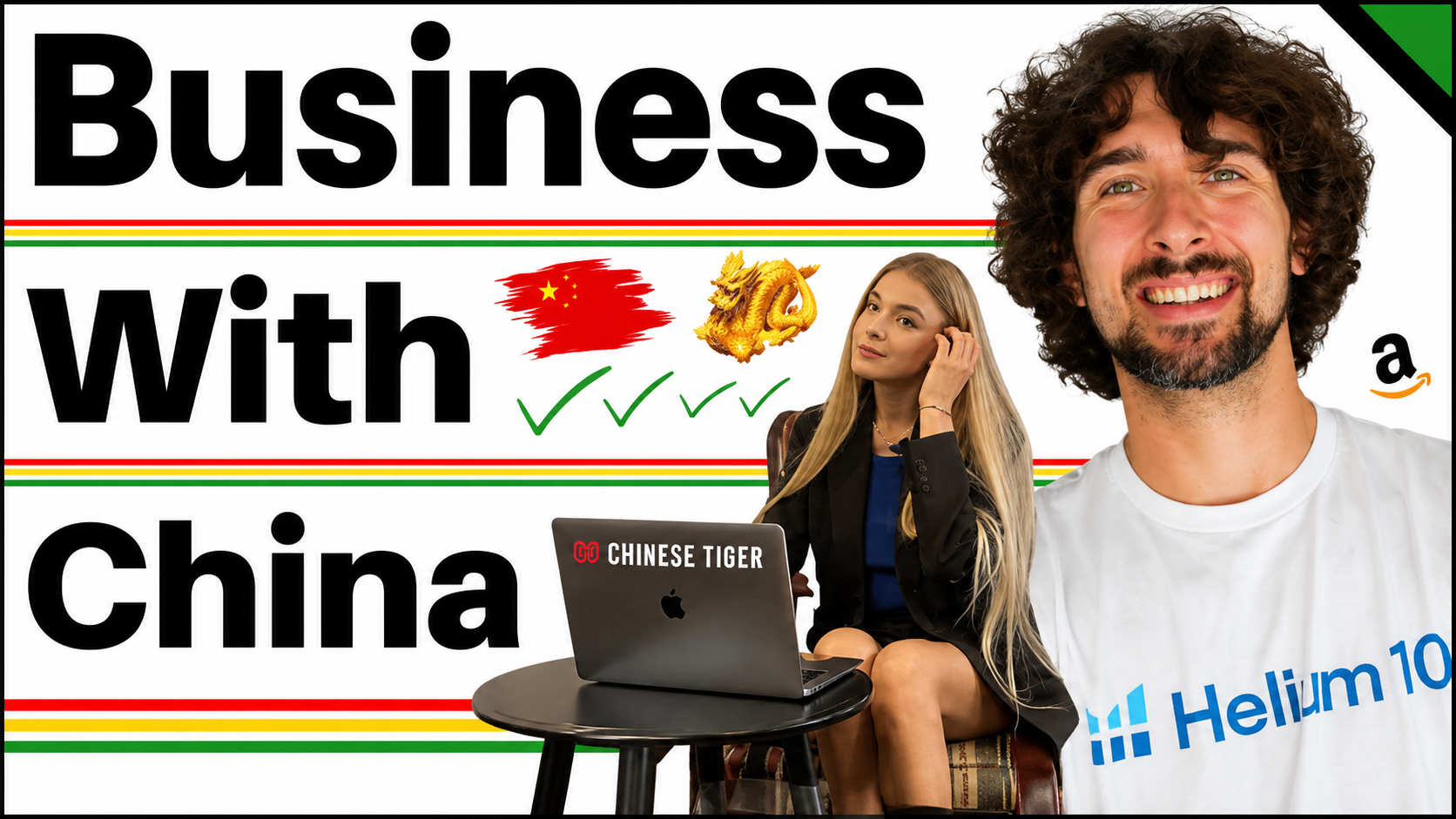
Buying products from China can be one of the smartest ways to build a profitable e-commerce business, but only if you do it with a plan.
The biggest wins usually come from:
👉🏻 Good preparation,
👉🏻 Clear supplier communication,
👉🏻 Smart sample testing,
👉🏻 Careful shipping decisions, and
👉🏻 Tight quality control.
Done well, sourcing from China can improve margins and help you build a stronger brand.
Done badly, it can waste months and drain cash fast.
This guide is built from practical sourcing advice shared in a discussion with Jane from Chinese Tiger, a company that helps businesses source, inspect, and ship products from China.
Mention My Name To Get FREE Inspection Of Product Sample From Chinese Tiger
What this guide will help you do
This guide walks through the full sourcing process in a practical order:
-
How to prepare before speaking to suppliers
-
How to compare factories and avoid weak quotes
-
How to use Alibaba and 1688 properly
-
How to communicate with Chinese suppliers without creating avoidable problems
-
How to test samples, protect margins, and reduce mistakes
-
How to think about molds, custom products, certifications, and trademarks
-
How to choose shipping methods and plan realistic timelines
-
How to avoid handing too much control to the supplier
If you are selling on Amazon, Shopify, or other online marketplaces, this is the part most people underestimate: sourcing is not just about finding a manufacturer.
It is about building a reliable system.
Why sourcing from China still makes sense
China is one of the strongest manufacturing hubs in the world for a reason.
It has deep factory networks, mature supply chains, flexible production capacity, and the ability to handle both standard products and custom development at scale.
That is why so many private label sellers, Amazon brands, and product-based businesses still rely on Chinese manufacturing.
But the real advantage is not just lower production cost.
It's that if you know how to source properly, you can combine manufacturing efficiency with better margins, faster scaling, and a stronger product offer.
However, many new sellers enter the process too early.
They start messaging suppliers before they understand their own product, their own numbers, or their own standards.
That is where expensive mistakes begin.
Mention My Name To Get FREE Inspection Of Product Sample From Chinese Tiger
Start with the product, not the supplier
The first thing to understand is simple: you should not contact suppliers until you know exactly what you want to buy.
This is where product research comes in.
Use market research tools like Helium 10, Jungle Scout, or similar platforms to study what already exists.
Look at demand, competition, pricing, review weaknesses, and what buyers keep complaining about.
You are not only looking for a product to sell.
You are looking for a product version you can justify selling.
That means asking practical questions:
-
What size should it be?
-
What color options matter?
-
What material makes sense?
-
Can the design be simplified to reduce cost?
-
Can a small add-on increase perceived value?
-
Is the packaging too expensive for what the product is?
That last point matters more than most people think.
Sometimes the box can cost more than expected, and if you are not watching it, packaging can quietly damage your margins.
Even something like cardboard thickness can affect your cost structure.
I’ve seen many sellers overlook how a few millimeters of cardboard can eat their profits.
To avoid this, you need to understand the specifics of packaging design and costs before you commit. Learn more here: How To Design Product Packaging That Sells (And Saves You Money)
Build a supplier-ready product brief
Once your product idea is clear, put everything into one document.
This should not be a messy folder of screenshots and scattered messages.
It should be a clean product brief, ideally in PDF format, that you can send to suppliers so they understand exactly what you want.
Your product brief should include:
<table><tbody><tr><td><p dir="ltr"><span>What to include</span></p></td><td><p dir="ltr"><span>Why it matters</span></p></td></tr><tr><td><p dir="ltr"><span>Product name</span></p></td><td><p dir="ltr"><span>Gives the supplier a simple reference point</span></p></td></tr><tr><td><p dir="ltr"><span>Basic product description</span></p></td><td><p dir="ltr"><span>Helps explain the item in plain terms</span></p></td></tr><tr><td><p dir="ltr"><span>Product images</span></p></td><td><p dir="ltr"><span>Reduces confusion and gives visual context</span></p></td></tr><tr><td><p dir="ltr"><span>Technical drawings or sketches</span></p></td><td><p dir="ltr"><span>Clarifies shape, measurements, and structure</span></p></td></tr><tr><td><p dir="ltr"><span>Material details</span></p></td><td><p dir="ltr"><span>Prevents the supplier from making assumptions</span></p></td></tr><tr><td><p dir="ltr"><span>Color references</span></p></td><td><p dir="ltr"><span>Helps match finishes, including Pantone when needed</span></p></td></tr><tr><td><p dir="ltr"><span>Packaging concept</span></p></td><td><p dir="ltr"><span>Lets the supplier quote the full project correctly</span></p></td></tr><tr><td><p dir="ltr"><span>Logo placement or branding notes</span></p></td><td><p dir="ltr"><span>Important for private label and custom branding</span></p></td></tr><tr><td><p dir="ltr"><span>Special instructions</span></p></td><td><p dir="ltr"><span>Covers anything unusual or easy to miss</span></p></td></tr></tbody></table>The more specific this file is, the better.
If your product is custom or includes a unique feature, make that clear too.
That is not the same as legal protection, but it still sets expectations and shows that you take ownership seriously.
Mention My Name To Get FREE Inspection Of Product Sample From Chinese Tiger
Know your numbers before you negotiate
A supplier quote means very little unless you already know what price works for your business.
This is one of the biggest mindset shifts new sellers need to make.
You are not trying to find the cheapest factory.
You are trying to find a factory that can produce a product at a cost that still works after shipping, platform fees, advertising, packaging, prep, and profit margin.
Before you contact suppliers, run your numbers using Amazon revenue calculators or tools like Helium 10 and Jungle Scout.
Work backward from your likely selling price and estimate how much room you have for product cost and shipping.
For example, if you learn that your product only works if the factory cost stays around $2 per unit, that number becomes your sourcing filter.
Now you are not negotiating blindly.
You know what you can afford, where your margin starts breaking, and which quotes deserve more attention.
Contact several suppliers, not just one
Once your brief and numbers are ready, start supplier outreach.
Reach out to several suppliers, ideally around five or six, so you can compare both price and quality of communication.
This comparison tells you a lot:
-
If one quote is much cheaper than the rest, there may be a reason
-
If one quote is much higher, that supplier may be including better materials or better service
-
If one supplier answers clearly and another keeps dodging details, that matters too
Supplier choice is never just about the number on the quote.
You are comparing:
-
Price
-
Minimum order quantity
-
Sample cost
-
Communication quality
-
Production lead time
-
Willingness to customize
-
Packaging ability
-
Trustworthiness
A good supplier is one that fits your actual business model, not just your first impression.
For more information, read: How To Check If A Product Supplier Is Legit?
Understand the difference between factories, trading companies, and middlemen
A lot of buyers assume they are talking directly to a factory when they are not.
This matters because trading companies and middlemen often add cost, filter communication, and make it harder to understand who is really producing the item.
That does not automatically make them bad.
Sometimes a trading company is useful, especially if they are organized and easy to work with.
But if your goal is lower cost and more direct control, knowing whether you are speaking to the real factory matters.
That leads to one of the most important platform decisions in China sourcing.
Alibaba vs 1688: what changes, and why it matters
Alibaba is the platform most international sellers know first.
It is in English, easy to browse, and built for foreign buyers.
But convenience often comes with higher prices.
1688 is different.
It's a domestic Chinese sourcing platform used far more heavily inside China.
It is fully in Chinese, more difficult to navigate, visually busier, and much less beginner-friendly.
But prices are often lower because you are more likely to find actual factories there.
That creates a trade-off:
<table><tbody><tr><td><p dir="ltr"><span>Platform</span></p></td><td><p dir="ltr"><span>Main benefit</span></p></td><td><p dir="ltr"><span>Main downside</span></p></td></tr><tr><td><p dir="ltr"><span>Alibaba</span></p></td><td><p dir="ltr"><span>Easier for foreign buyers</span></p></td><td><p dir="ltr"><span>Higher prices, more middlemen</span></p></td></tr><tr><td><p dir="ltr"><span>1688</span></p></td><td><p dir="ltr"><span>Lower prices, more factory access</span></p></td><td><p dir="ltr"><span>Language barrier, harder communication</span></p></td></tr></tbody></table>In practice, many serious sourcing conversations eventually move to WeChat anyway, because that is where Chinese business communication often happens.
If you do not speak Chinese, 1688 can be difficult to use well.
Auto-translation is not enough for detailed sourcing work.
That is one reason sourcing agents become valuable, especially when custom requirements are involved.
If you're still undecided on which platform to use, read my breakdown on where to find the best Chinese suppliers.
How to communicate with Chinese suppliers effectively
Chinese supplier communication is not always as direct as many Western buyers expect.
Business culture there is more relationship-based, and tone matters a lot.
Coming in aggressively, sounding impatient, or acting like a boss can backfire quickly.
A better approach is to sound serious, respectful, and human.
Introduce yourself clearly.
Mention your business.
Let them know you are building a brand or selling online and are looking for repeat orders, not just a one-time transaction.
That tells the supplier you are worth paying attention to.
Relationship quality matters because it can influence:
-
Responsiveness
-
Willingness to negotiate
-
Flexibility
-
Speed of problem-solving
-
Small extras like label support or packaging help
Another thing to take care of is, when a problem needs to be raised, do not attack the supplier directly.
Instead, you can say that your client, partner, or teammate is unhappy with the issue.
This lets you keep a good personal relationship while still pushing for a better outcome.
The point is not manipulation for its own sake.
It's to preserve rapport while solving the problem.
Mention My Name To Get FREE Inspection Of Product Sample From Chinese Tiger
Repeat important instructions more than once
This may feel unnecessary at first, but it is one of the most practical lessons in my entire discussion with Jane.
She said that when something matters, you should repeat it.
If a color must be exact, if a button must be green, if the logo must be placed a certain way, if the packaging finish matters, say it more than once and confirm it again later.
This is not rude.
It is an operational discipline.
Suppliers may sometimes skip a question, forget to respond, or avoid answering something unclear.
Repetition helps lock in the detail and reduces the chance that an assumption slips into production.
If one message contains a critical requirement, do not assume that message alone will protect you.
Samples are not optional
If you are serious about sourcing well, samples are mandatory.
They show real product quality.
They encourage the supplier to meet or exceed the quality criteria.
They also help reveal branding issues.
Logo printing, color matching, and packaging execution often look different in real life than they do in a message thread.
Samples are useful for marketing as well.
Before your bulk shipment even arrives, samples can be photographed and filmed for listings, product pages, and social media promotion.
That gives you a head start.
A product sample is not just a product check.
It is a quality check, a brand check, and a launch asset.
For more information, read: How To Get The Best Samples For Amazon FBA Products
How to make samples less expensive
Sample costs can add up quickly, especially when testing several factories.
But there are a few ways to manage that better.
First, ask whether the sample fee can be refunded if you place a bulk order later.
Second, avoid shipping every sample straight to your home country if you do not need to.
International sample shipping is expensive, slow, and inefficient when you are comparing multiple options.
A better approach is to receive those samples in China first through a trusted local team or sourcing partner.
For this, Jane mentioned that her team can inspect samples in China, take detailed photos and videos, compare them, and help you decide which one is strongest before consolidating shipments.
That means you can:
-
Compare multiple suppliers more cheaply
-
Avoid paying full international shipping five times
-
Get visual proof before forwarding anything
-
Combine samples into one parcel later
This is a simple operational change, but it can save both time and money.
For more ways, read: How to Save Money on Ordering Product Samples From a Chinese Supplier?
How to save money without lowering quality
A lot of sellers treat savings as a negotiation issue only.
That is too narrow.
Good savings often come from sourcing structure, not just bargaining.
For example, if your metal product includes a wooden handle, the metal factory may be buying that wooden part from someone else and adding markup.
The same goes for packaging.
In cases like that, it may be cheaper to source:
-
Wood parts from a wood-focused supplier
-
Boxes from a packaging factory
-
Accessories from a specialist supplier
This creates more work, but it can reduce cost significantly.
You can also consider a split-shipping approach for first orders. For example, you might send a small quantity by air to launch quickly, then send the rest by sea to protect margin.
That way you do not pay premium shipping on the full order just because you want to start sooner.
Mention My Name To Get FREE Inspection Of Product Sample From Chinese Tiger
Keep watching after the order starts
One of the most dangerous moments in sourcing is right after the payment is sent.
Many buyers relax too early.
The truth is that production oversight matters almost as much as supplier selection.
You need to keep checking critical details while the order is being made.
Ask for updates.
Confirm materials again.
Confirm the packaging again.
Confirm color again.
The reason this matters is simple: an approved sample does not guarantee correct mass production.
Do not assume the factory sees the final product the same way you do.
Confirm visually.
Confirm repeatedly.
Save message history.
Keep proof.
For more insights, read: Is It Worth Delegating Everything To A Chinese Supplier? How Much Can You Trust Them In This?
When custom products require molds
If you are only adding a logo to an existing product, molds may not matter.
But if you want a truly custom product or a meaningful change to an existing one, you may need a mold.
A mold is the production form used to manufacture your item at scale.
Learn more about them here: Understanding Mold Manufacturing: What Are Molds and Why Do They Cost So Much?
Jane explained that if the design is new or structurally different, the factory cannot mass-produce it without creating that mold first.
That process usually starts with engineering.
For example, if you have an idea for a modified kitchen tool, a redesigned product feature, or a unique product body, you will likely need:
-
A technical design or 3D drawing
-
Engineering support
-
Mold creation
-
A pre-production sample
-
Bulk production
Molds are expensive because they require time, machinery, technical work, and factory resources.
Jane gave a rough range of about $2,000 to $6,000 depending on the material and complexity.
That can feel steep at first, but it only makes sense to judge it against the product’s potential.
If the product sells well and differentiates you from the market, a mold can pay for itself quickly.
Mention My Name To Get FREE Inspection Of Product Sample From Chinese Tiger
When supplier design help is enough, and when it is not
Factories can sometimes help with simple design work, especially basic packaging.
If all you need is a simple box layout with a logo and clear text, some suppliers can manage that.
But this breaks down when the design becomes more creative, polished, or market-sensitive.
When you are building a customer-facing brand instead of a package that holds the product, hiring a professional designer is a better approach.
The safest way to send design files
According to Jane, the safest way to send files is in PDF format.
Avoid native source files like AI and other editable design formats because Chinese suppliers may use different programs, may not open those files correctly, or may not handle them consistently.
PDF is more stable and easier to review on both sides.
Also, use metric units.
That means centimeters and kilograms, not inches and gallons.
She notes that imperial measurements often confuse Chinese suppliers and create unnecessary back-and-forth.
When sending packaging or product design files, make sure the document includes:
-
Dimensions
-
Layout
-
Color notes
-
Material notes
-
Print positions
-
Logo placement
-
Any important finish details
This is a small process detail, but it can prevent expensive manufacturing errors.
For more insights, see my conversation with Jane about sending designs to Chinese suppliers.
Mention My Name To Get FREE Inspection Of Product Sample From Chinese Tiger
Why you should not let the supplier “just decide”
It is fine to ask the supplier for technical input.
However, it's never wise to let them make creative or brand decisions for you.
Jane said suppliers tend to recommend whatever they already know, whatever is easiest for them, or whatever creates better profit on their side.
That does not mean they are trying to hurt you.
It means their priorities are different, and letting them do what they deem best means leaving too much room for:
-
Cheaper materials than you expected
-
Generic packaging
-
Weak presentation
-
Decisions that fit factory convenience, not customer appeal
A safer approach is to ask them for their opinion.
Do not let them choose the product direction for you.
This is especially important if you are building a differentiated brand and not just reselling a commodity.
Language barriers are bigger than most people expect
One of the clearest themes in the source material is that language issues do not disappear just because the supplier speaks some English.
Many English-speaking managers can handle simple questions well enough, such as price, quantity, and basic product details.
But when the conversation becomes technical or customized, problems start to appear.
That is why auto-translation is not enough for serious sourcing work.
The issue is not just grammar.
It is the meaning.
That meaning gap can affect:
-
Customization
-
Production instructions
-
Packaging text
-
Branding nuance
-
Compliance details
-
Materials discussion
Factories may be excellent at manufacturing.
That does not mean they are the right people to write Western-market copy or build brand language.
Contracts, invoices, and certifications
Paperwork is important, but it’s also important to understand its limits.
A good contract should clearly mention pricing, materials, timelines, packaging, and delivery terms. It acts as a shared reference so both sides stay on the same page.
However, if you are working with a supplier in China, you cannot always rely on legal enforcement the same way you would locally. Taking legal action across countries is difficult and often not practical.
That’s one reason services like Chinese Tiger use a registered company inside China. It allows them to handle contracts locally and add an extra layer of control.
If you want to see how that works in practice, read my honest review of Chinese Tiger's services.
Now, beyond contracts, certifications are just as important.
What you need depends on three things:
-
What product you are selling
-
Where you are selling it
-
Which platform you are using
Some products require certifications like CE, FDA, ISO, or child safety approvals.
According to Jane, it’s best to check these requirements early.
This is especially important for categories like toys, electronics, pet products, and anything regulated.
She also pointed out something interesting.
In some cases, getting certifications through trusted partners in China can cost less than doing everything in Western countries.
For example, she shared a case where children’s product certification was much cheaper when done through China compared to Canada.
The key takeaway is simple.
Don’t treat compliance as something to figure out later. Plan for it from the start.
Mention My Name To Get FREE Inspection Of Product Sample From Chinese Tiger
Protect custom products in China, not just at home
If your product is truly original, legal protection in China matters.
Because otherwise, the factory or someone connected to that ecosystem may reproduce it or sell it elsewhere.
Jane recommended considering:
-
Patents for truly unique product designs or structures
-
Trademarks for brand names and logos
Chinese Tiger can help with both options…
A written statement in your product brief is better than silence, but it is not the same as formal protection.
If the product is worth building, then protecting it where it is made is often worth serious consideration.
This does not mean every beginner needs an immediate patent.
It means you should understand the risk of building something valuable in a place where replication is easy.
Shipping methods: when to use air, sea, or rail
Shipping isn’t just about moving products from one place to another.
It directly impacts your profit.
Most sellers rely on air and sea shipping, while rail is used less often and mainly in certain regions.
Each method has its own clear role and purpose.
Air shipping works best when:
-
The product is small and light
-
You need stock quickly
-
You are launching a seasonal item
-
Going out of stock would hurt the business more than the shipping cost
Sea shipping works best when:
-
The order is larger
-
You have enough planning time
-
Margin matters more than speed
-
You are running the business with a longer-term inventory system
For more information, read my guide about how long it takes for your product to arrive on Amazon.
Mention My Name To Get FREE Inspection Of Product Sample From Chinese Tiger
Do not blindly trust supplier shipping quotes
Many suppliers will offer to handle shipping for you.
That sounds convenient, but Jane warned that it is often not the best idea.
The problem is that suppliers may add margin to the freight without making that obvious.
For example, they may charge a buyer $8 per kilo while actually paying the logistics provider $2 per kilo.
Therefore, it is recommended to compare several freight forwarders directly.
When asking for freight quotes, share:
-
Product type
-
Carton dimensions
-
Weight
-
Destination
-
Shipping method preference
-
Timing needs
Then compare not only price, but also customs handling, reliability, and process clarity.
Just like with suppliers, the cheapest shipping quote is not always the best one.
A slightly better logistics partner can save you money later by reducing delays, customs mistakes, or hidden complications.
Here are 3 best freight forwarders for Amazon FBA.
I’ve personally worked with all of them, so they’re reliable, easy to work with, and understand how to handle FBA shipments properly.
How long the whole process really takes
This is where many beginners get impatient.
According to Jane, if you are starting from scratch, you should allow at least three months for the full sourcing cycle.
That includes supplier search, sample approval, production, logistics prep, and final shipping.
A realistic flow can look like this:
<table><tbody><tr><td><p dir="ltr"><span>Stage</span></p></td><td><p dir="ltr"><span>Typical time</span></p></td></tr><tr><td><p dir="ltr"><span>Supplier search and quote comparison</span></p></td><td><p dir="ltr"><span>1 to 2 weeks</span></p></td></tr><tr><td><p dir="ltr"><span>Sample payment processing</span></p></td><td><p dir="ltr"><span>2 to several days</span></p></td></tr><tr><td><p dir="ltr"><span>Sample production</span></p></td><td><p dir="ltr"><span>7 to 15 days</span></p></td></tr><tr><td><p dir="ltr"><span>Sample inspection or overseas shipping</span></p></td><td><p dir="ltr"><span>2 to 15 days</span></p></td></tr><tr><td><p dir="ltr"><span>Bulk production</span></p></td><td><p dir="ltr"><span>30 to 40 days</span></p></td></tr><tr><td><p dir="ltr"><span>Handoff to logistics company and prep</span></p></td><td><p dir="ltr"><span>around 1 week</span></p></td></tr><tr><td><p dir="ltr"><span>Final shipping</span></p></td><td><p dir="ltr"><span>15 to 30 days depending on method</span></p></td></tr></tbody></table>This is not a hard law, but it is a useful planning frame.
The good news is that repeat orders are much easier.
Once your supplier, packaging, inspection, and shipping chain are in place, the process becomes more predictable.
Over time, trust can also improve your negotiation power, your response speed, and sometimes even your payment terms.
Mention My Name To Get FREE Inspection Of Product Sample From Chinese Tiger
When a sourcing agent actually makes sense
Not everyone needs a sourcing agent, but many people need one sooner than they think.
If you speak Chinese, understand factories well, know how to review quality, and can handle logistics, you may not need outside help for basic sourcing.
But if any of these apply, an agent can make real sense:
-
You do not speak Chinese
-
You want to use 1688
-
You are sourcing custom products
-
You need inspections in China
-
You want one team to compare suppliers, receive samples, and manage logistics
-
You want fewer preventable mistakes
At Chinese Tiger, they work on a commission-based model, sometimes around 10 percent of the invoice, with lower rates for repeat or high-value orders.
Separate services like inspections and product photography may be priced separately.
The right way to judge an agent is not by the fee alone.
Judge them by whether they reduce cost, save time, improve communication, and help you avoid errors that would cost more than the service itself.
What Chinese factories can do well, and where the limits are
There is a tendency to say, “China can make anything.”
That is mostly true in capability terms, but not always in practical terms.
Jane shared that the two biggest limits are price and quantity.
If a client wants a highly customized product but only wants 300 units, many factories simply will not see that as realistic.
Special tooling, new workflows, or unusual production methods usually need higher order quantities to make sense.
For more information, read: Can Chinese Manufacturers Do Everything? Here's the Answer
A practical sourcing checklist before you place an order
Before moving forward, make sure you can say yes to these:
<table><tbody><tr><td><p dir="ltr"><span>Question</span></p></td><td><p dir="ltr"><span>Yes / No</span></p></td></tr><tr><td><p dir="ltr"><span>Do I know exactly what product I want?</span></p></td><td><ul><li><p><img alt="unchecked" height="25.599999999999998px" src="https://d3k4u3gtk285db.cloudfront.net/vovaeven/blog-image/996ecb0d-95a2-40cd-b523-05efc94af8fb" width="25.599999999999998px"><br></p></li></ul></td></tr><tr><td><p dir="ltr"><span>Have I researched demand and competition?</span></p></td><td><ul><li><p><img alt="unchecked" height="25.599999999999998px" src="https://d3k4u3gtk285db.cloudfront.net/vovaeven/blog-image/de1b6a1b-1cbe-4d62-9348-e86c52684a49" width="25.599999999999998px"><br></p></li></ul></td></tr><tr><td><p dir="ltr"><span>Do I know my target cost and margin range?</span></p></td><td><ul><li><p><img alt="unchecked" height="25.599999999999998px" src="https://d3k4u3gtk285db.cloudfront.net/vovaeven/blog-image/57285535-2fdf-4bcc-b0b4-9a8c285acd6e" width="25.599999999999998px"><br></p></li></ul></td></tr><tr><td><p dir="ltr"><span>Have I prepared a clear PDF product brief?</span></p></td><td><ul><li><p><img alt="unchecked" height="25.599999999999998px" src="https://d3k4u3gtk285db.cloudfront.net/vovaeven/blog-image/79950156-8898-4735-86cd-33d1dd749b60" width="25.599999999999998px"><br></p></li></ul></td></tr><tr><td><p dir="ltr"><span>Have I contacted multiple suppliers?</span></p></td><td><ul><li><p><img alt="unchecked" height="25.599999999999998px" src="https://d3k4u3gtk285db.cloudfront.net/vovaeven/blog-image/9ea0fa5d-1a1f-4f29-be4e-1f2fb6a4cee6" width="25.599999999999998px"><br></p></li></ul></td></tr><tr><td><p dir="ltr"><span>Have I compared price, MOQ, and communication quality?</span></p></td><td><ul><li><p><img alt="unchecked" height="25.599999999999998px" src="https://d3k4u3gtk285db.cloudfront.net/vovaeven/blog-image/4cebe064-d052-4fc8-ab37-6f493d6ea540" width="25.599999999999998px"><br></p></li></ul></td></tr><tr><td><p dir="ltr"><span>Have I ordered and reviewed samples?</span></p></td><td><ul><li><p><img alt="unchecked" height="25.599999999999998px" src="https://d3k4u3gtk285db.cloudfront.net/vovaeven/blog-image/57a53f00-f7f3-4b27-8fe4-e808ab81d0b0" width="25.599999999999998px"><br></p></li></ul></td></tr><tr><td><p dir="ltr"><span>Have I confirmed branding, packaging, and materials?</span></p></td><td><ul><li><p><img alt="unchecked" height="25.599999999999998px" src="https://d3k4u3gtk285db.cloudfront.net/vovaeven/blog-image/65e5b917-ce01-455f-b82f-53a831a36e29" width="25.599999999999998px"><br></p></li></ul></td></tr><tr><td><p dir="ltr"><span>Have I checked certification requirements?</span></p></td><td><ul><li><p><img alt="unchecked" height="25.599999999999998px" src="https://d3k4u3gtk285db.cloudfront.net/vovaeven/blog-image/51666796-5943-4e6f-87a8-7c48ff4b1a96" width="25.599999999999998px"><br></p></li></ul></td></tr><tr><td><p dir="ltr"><span>Have I planned a shipping method and freight comparison?</span></p></td><td><ul><li><p><img alt="unchecked" height="25.599999999999998px" src="https://d3k4u3gtk285db.cloudfront.net/vovaeven/blog-image/b30eb2c8-f009-470b-9b29-da11af906685" width="25.599999999999998px"><br></p></li></ul></td></tr><tr><td><p dir="ltr"><span>Have I decided how production will be supervised?</span></p></td><td><ul><li><p><img alt="unchecked" height="25.599999999999998px" src="https://d3k4u3gtk285db.cloudfront.net/vovaeven/blog-image/d6066652-9437-468c-94a9-a2af89825aea" width="25.599999999999998px"><br></p></li></ul></td></tr><tr><td><p dir="ltr"><span>If the product is unique, have I considered protection in China?</span></p></td><td><ul><li><p><img alt="unchecked" height="25.599999999999998px" src="https://d3k4u3gtk285db.cloudfront.net/vovaeven/blog-image/1dd1b305-166c-4e80-a047-ad4ba729ee72" width="25.599999999999998px"><br></p></li></ul></td></tr></tbody></table>If too many of these are still unanswered, you are not ready to place the order yet.
Mention My Name To Get FREE Inspection Of Product Sample From Chinese Tiger
Final thoughts
Sourcing from China can be highly profitable, but only when treated as a system.
The sellers who do best are not the ones who simply “find a cheap factory.”
They are the ones who prepare properly, understand their numbers, compare suppliers intelligently, use samples well, communicate clearly, supervise production, and think ahead about logistics, compliance, and product protection.
That is the real blueprint.
China can give you manufacturing power, but it does not remove the need for discipline.
You still need clarity.
You still need follow-up.
You still need to protect the product and brand you are building.
If you approach sourcing with that mindset, you are far more likely to end up with a product business that is not only cheaper to run, but stronger, cleaner, and easier to scale.
P.S. - I recently published a guide explaining how Amazon FBA wholesale sourcing and replenishment work as one continuous system, from brand analysis and supplier price lists to inventory restocking and FBA shipment management, read here: Amazon FBA Wholesale Sourcing & Replenishment Strategy REVEALED!