Amazon Arbitrage & Wholesale Sellers: Do You Need Insurance?

In this guide
The quick answer
Do Amazon online arbitrage and wholesale sellers need product liability insurance?
Yes, online arbitrage and wholesale sellers can need commercial liability insurance even though they do not manufacture the products they resell. Under Amazon's US insurance policy, sellers generally must obtain qualifying coverage within 30 days after gross proceeds exceed $10,000 in one month, or sooner if Amazon requests it. Since November 2, 2026, certain enhanced-safety categories require coverage regardless of sales volume. Your policy must cover the products you actually sell.
If you sell your own private-label product, buying liability insurance may feel obvious: customers see your brand on the packaging. But what if you buy branded products from a distributor or find deals for online arbitrage? Surely the manufacturer already has insurance?
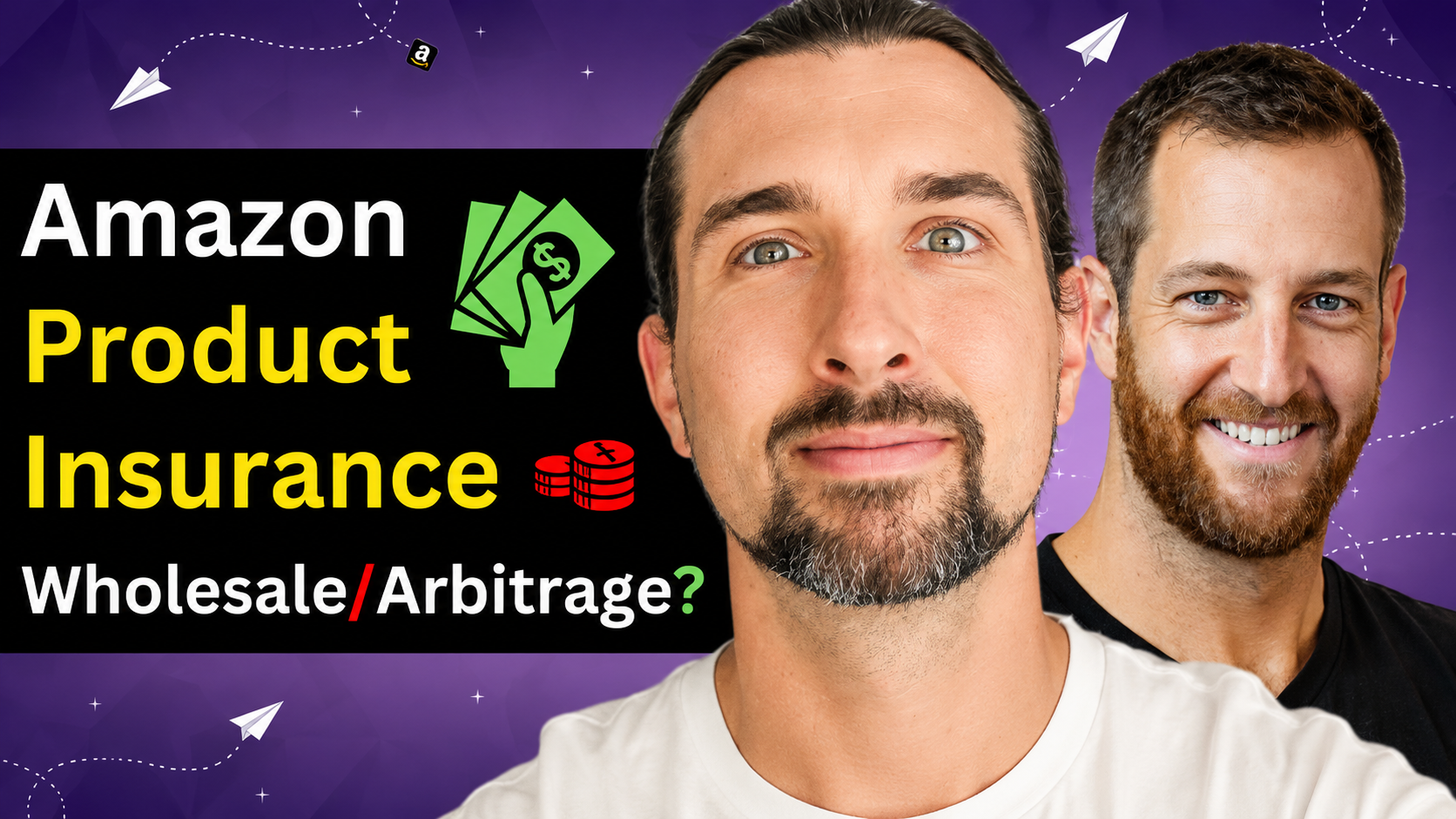
That is the question I asked Amit Batzir, co-founder of Spott, during our conversation about Amazon product insurance. We used a hypothetical example of Sony headphones to explain why a reseller might still want an insurance company handling a claim. Below, I'll separate that discussion from Amazon's current requirements and show what to check before purchasing coverage.
Disclosure and service update
This video originally featured Spott, which is no longer in business. I now recommend speaking with Lawrence Lipman about Amazon seller insurance; I have purchased insurance through him myself. Recommendations may involve referrals, and I cannot promise a particular premium or approval. Read my disclosure.
Why resellers need to think about product liability
A customer who says a product caused an injury or damaged their home may not know who manufactured it, imported it, or supplied it to the Amazon seller. A claim can involve several businesses in the supply chain. Whether any particular reseller is legally liable depends on the facts and the law that applies, but simply reselling a recognized brand does not make the risk disappear.
Think of a charger that overheats or an appliance that allegedly damages a countertop. The customer might contact Amazon or the storefront that sold the item. Even when the manufacturer ultimately bears responsibility, the seller may have to respond, supply purchase records, or seek legal advice.
The goal of insurance is not to stop someone from making an allegation. It is to help a covered business respond to eligible claims, including investigation, defense, and potentially settlements or judgments, subject to the policy's terms and limits. That distinction is important when you sell products made by other companies.
Private label vs. wholesale vs. online arbitrage
The sourcing model changes your relationship with the product, but Amazon's insurance requirement is directed at the seller account and the products listed, not just at manufacturers. These are practical differences to discuss with a broker.
| Selling model | What to discuss with the insurer |
|---|---|
| Private label | Your brand, manufacturing arrangements, product testing, warnings, imports, and quality controls. |
| Wholesale | The brands and categories you distribute, supplier documentation, sales territory, and whether your entity is covered. |
| Online arbitrage | Your changing assortment, sourcing records, high-risk items, and any exclusions affecting resale inventory. |
A wholesale account or branded retail receipt does not automatically place your business under the manufacturer's insurance policy. You may be able to request contractual protections or evidence of coverage from suppliers, but ask your own insurance professional whether those arrangements actually protect you.
Amazon insurance requirements: what changed in 2026?
For Amazon.com in the United States, the general trigger remains more than $10,000 in gross proceeds during any one month. Amazon says qualifying insurance must be obtained and maintained within 30 days after crossing that threshold, or when the company otherwise requests coverage. This is based on gross proceeds, not profit after fees.
There is an important newer rule: effective November 2, 2026, products in categories subject to enhanced safety listing requirements require qualifying liability insurance even if sales remain below $10,000. Amazon identifies examples including certain children's products, cosmetics and ingestible products, and lithium battery products. Check the precise requirements for your ASINs in Seller Central. This applies to new and existing listings.
Amazon also introduced a separate rule for sellers based in Mainland China: qualifying new insurance must generally be obtained through Amazon Insurance Accelerator unless Amazon agrees otherwise in writing. Read Amazon's November 2026 announcement and the enhanced-safety category guidance before relying on an older video.
The core US policy calls for at least $1 million per occurrence and in aggregate, coverage for products and bodily injury, an acceptable deductible, and Amazon named as an additional insured. It also sets requirements for the insured business name, insurer, policy wording, and certificate. Insurance obligations may differ for other Amazon country stores.
Insurance contact
Talk with Lawrence Lipman about your Amazon store
Spott no longer operates. I purchased Amazon seller insurance through Lawrence and recommend contacting him for a quote. Tell him whether you sell wholesale, online arbitrage, or private label, and mention Vova Even.
lipmaninsurance@gmail.com
Email Lawrence about insurancePricing, eligibility, coverage, and Amazon acceptance depend on your business and policy documents.
Does one policy cover hundreds of arbitrage products?
In the interview, Amit describes the possibility of broader, umbrella-style coverage for an arbitrage business selling many different items. That makes intuitive sense: sellers do not want to buy a separate insurance policy every time they add a new SKU. But an umbrella policy is not an automatic promise that every product is covered.
Amazon accepts commercial general, excess, or umbrella liability policies that meet its requirements. In insurance practice, umbrella or excess policies may sit above underlying coverage. Whether they extend to a particular claim depends on the actual policy wording, exclusions, and required underlying insurance.
For a changing catalog, share a realistic description of your categories and sourcing model. Ask how adding a new category affects the policy. A seller handling home goods one month and batteries or children's items the next should not assume the original quote covers both. Amazon requires the policy to cover the products listed for sale.
The Sony headphones example: who deals with a claim?
Our conversation uses Sony headphones as a hypothetical wholesale or arbitrage product. Suppose a customer alleges that a pair caused an injury. The retailer might believe the manufacturer should be responsible because the retailer did not design or build the headphones.
Amit's point was practical: rather than personally trying to negotiate with a large manufacturer, the seller would prefer an experienced insurance claims team to assess what happened and handle covered matters. He mentioned The Hartford as an example of an established insurer, not as a guarantee that this insurer would cover or recover money in a particular case.
Your carrier may coordinate with other parties when policy terms and the facts support doing so. It may also deny a claim if an exclusion applies. The brand name on the packaging does not by itself answer who is legally responsible or which policy responds.
What product liability insurance can and cannot cover
Potentially covered claims
Covered bodily injury, damage to someone else's property, legal defense, and eligible settlements or judgments connected with products you sell.
Not automatically included
Lost sales, inventory theft, product recalls, intellectual-property disputes, or items and territories excluded by your policy.
Do not confuse product liability insurance with protection for your stock, cargo, or Amazon account health. Different risks can require different policies. The Hartford's product liability overview explains why retailers, wholesalers, and manufacturers all consider this coverage.
Amazon's injury and property-damage A-to-z claims process is another separate issue. For certain claims of $1,000 or less, Amazon says it can resolve the customer claim without seeking reimbursement from sellers who have uploaded qualifying insurance. That is not a substitute for having coverage or responding to notices. See the official claims process.
How to get a useful quote for your Amazon business
Whether you have five products or a thousand, a clear description of your business is the best starting point. Send the same information to any brokers you compare so that the quotes address similar coverage.
- Identify your business. Provide the legal entity name shown in Seller Central, your country, and where you sell.
- Describe your inventory. List product categories, sample ASINs, brands, supplier types, and any electronics, children's items, cosmetics, or other special-risk products.
- Share sales information. Include recent gross sales, projected turnover, sales territories, and any past claims or recalls.
- Ask about coverage. Confirm product/completed-operations coverage, exclusions, occurrence basis, limits, deductible, and whether each marketplace is covered.
- Check the Amazon certificate. Ask the insurer to use the required additional-insured wording and ensure the insured name matches your account.
If Amazon has already requested proof, share the notice and deadline. After purchasing, upload the Certificate of Insurance through Seller Central's Business Insurance area, then check for acceptance or requested corrections. Keep the policy and certificate available for renewals and claims.
What should you do if a customer reports an injury?
If a buyer says a product caused bodily injury or property damage, take the report seriously even if you believe the item was genuine and correctly sourced. Preserve the Amazon order details, customer messages, invoices, product identifiers, and any batch or supplier information that may help establish what happened.
Notify your insurer or broker promptly and follow the policy's claims-reporting instructions. Respond to any Seller Central notification within the stated deadline. Avoid making promises about liability, payment, or coverage before the relevant professionals have reviewed the claim. If the incident suggests an ongoing safety issue, investigate affected inventory rather than treating it as an isolated refund.
US retailers can also have product-safety reporting duties. The Consumer Product Safety Commission's retailer guidance explains when businesses must report potentially hazardous products. Insurance helps address defined financial exposure; it does not replace safety compliance.
Frequently asked questions
Do online arbitrage sellers need insurance if they sell other brands?
Yes, they may need it. Amazon's threshold, category rules, or a direct request can make it mandatory. The manufacturer's identity does not automatically insure the reseller.
Do wholesalers need separate insurance for each product?
Not necessarily. One suitable policy may cover multiple categories, but the insurer must agree to the assortment and the policy must not exclude products you sell.
Is insurance mandatory below $10,000 in monthly sales?
Sometimes. Amazon can request coverage, and enhanced-safety product categories now require it regardless of gross proceeds. Otherwise, coverage may still be advisable even before the general US threshold is met.
Does FBA shipping replace product liability insurance?
No. Fulfillment by Amazon handles logistics for eligible orders; it does not replace the seller's commercial liability insurance obligations.
How much does Amazon seller insurance cost?
There is no universal price. Product risk, categories, revenue, sales countries, claims history, and coverage limits can change the quote. Compare actual policy terms rather than premiums alone.
Ready to review your coverage?
Request a quote that reflects what you actually sell
Email Lawrence Lipman at lipmaninsurance@gmail.com. Mention Vova Even and explain your business model, main product categories, and Amazon marketplace. Ask which products and risks the proposed policy covers.
Contact Lawrence LipmanMore insurance videos and seller resources
If you're deciding what coverage to buy, these tutorials and articles provide useful next steps. Keep in mind that older videos may feature Spott or rules that have since changed.
Amazon Product Insurance
Watch more interviews and explanations about product liability and protecting an Amazon store.
Watch insurance playlistAmazon FBA Freedom Podcast
Explore interviews with entrepreneurs about building and operating ecommerce businesses.
Watch entrepreneur interviewsFor a wider explanation, read my Amazon seller insurance guide, the factors that influence insurance cost, or my guide for non-US Amazon sellers.
The main lesson from my talk with Amit is straightforward: selling someone else's product does not mean you should handle the risk alone. Check Amazon's rules, disclose your full catalog to the insurer, and choose coverage you understand before a problem appears.
Vova :)